
Surgical Scar Treatment: How Laser Therapy Improves C-Section & Post-Op Scars
Many of the people who come to us about surgical scars have been carrying those scars for years. A C-section line that sits low and tight across the abdomen. A breast surgery scar that shows above certain necklines. A laparoscopic or abdominal scar from a procedure years past. These scars are often reminders of significant physical experiences and, for many people, continue to affect comfort, confidence, or how they feel about their skin long after the procedure itself.
What we also hear, consistently, is that many people assumed nothing could be done, that surgical scars were simply the price of the procedure, something to accept rather than address, and that aesthetic clinics treated fine lines and pigmentation rather than the kind of structural scar tissue that develops after surgery.
That assumption is understandable, and it is also incorrect. Surgical scars, including C-section scars, breast surgery scars, and post-operative abdominal scars, are among the more treatable types of scarring, and the clinical tools available for this work have advanced considerably. This article explains what treatment involves, what can be expected at different stages of scar maturity, and how we approach this work at Emerald Skin Lab.
Why Surgical Scars Respond Well to Laser Treatment
Surgical scars form through a predictable healing process. When the skin is incised and sutured, the body repairs the wound by laying down collagen fibres, but unlike the organized collagen structure of healthy skin, scar collagen is deposited in a more irregular, dense pattern. This is what gives scars their raised texture, altered colour, and sometimes tight or tethered quality.
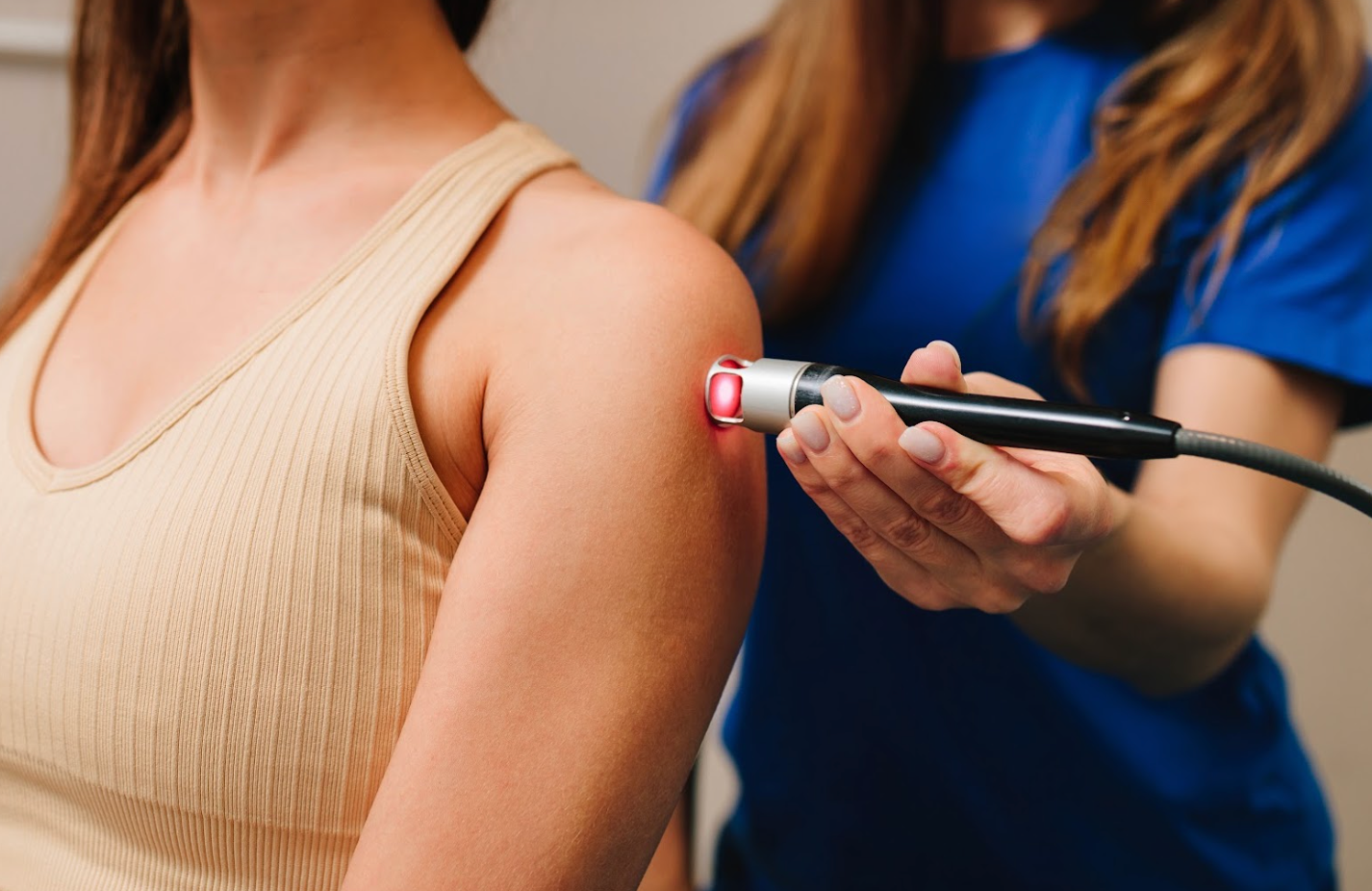
Laser treatment works by remodelling that scar tissue. Rather than removing the scar, the laser stimulates the skin's own repair mechanisms, encouraging the breakdown of disorganized collagen and its gradual replacement with a more structured, even formation. Over a series of sessions, this leads to visible improvements in the scar's elevation, colour, texture, and in some cases, its softness and pliability.
These types of post-operative scars tend to respond particularly well because they have defined borders, predictable tissue composition, and a clear history, all of which make it easier to calibrate treatment appropriately. Age is also less of a limiting factor than many people assume: scars that are several years old can still respond well to laser remodelling, though the process may require more sessions and more patience than early-intervention treatment.
When to Begin Treatment: Early Intervention and Mature Scars
The timing of scar treatment matters, and the approach differs depending on where the scar is in its healing cycle.
Early Intervention: 4–6 Weeks Post-Surgery
For those who have recently had surgery, an early-intervention approach may be considered once the wound has fully closed and the skin is sufficiently healed, typically around four to six weeks post-procedure, depending on the individual's recovery. Beginning treatment during the active remodelling phase of scar development can help guide the collagen formation process before the scar has fully consolidated, which may lead to a more favourable outcome with fewer sessions overall.
Early-intervention protocols are more conservative in their parameters; the tissue is still in a healing state and needs to be treated accordingly. A clinical assessment will determine whether the scar is at a stage where treatment is appropriate to begin.
Mature Scars: Treatment at Any Point
For scars that have already fully matured, whether they are two years old or ten, laser treatment remains a viable and often effective option. The biology is different from early-intervention work: the scar has stabilized, and the treatment is working to break down and remodel existing dense tissue rather than guide active collagen formation. This typically requires more sessions, and improvement tends to be more gradual, but meaningful change in texture, elevation, and colour is achievable for most mature surgical scars.
It is worth noting that no scar treatment, laser or otherwise, will produce a result that is invisible to the eye. The realistic goal is a scar that is flatter, softer, more even in tone, and less prominent than it was before treatment. For many people, this represents a significant and meaningful change in how they experience their own skin.
A note on session numbers
C-section and abdominal scars typically require approximately 3 to 5 treatment sessions, spaced around 4 to 6 weeks apart. Breast surgery and post-operative scars vary depending on the length, depth, and age of the scar. These are general reference points only; the only reliable way to estimate the number of sessions appropriate for a specific scar is through a clinical assessment, where the scar can be evaluated directly.
How Fotona's Er:YAG and Nd:YAG Wavelengths Work on Surgical Scar Tissue
At Emerald Skin Lab, surgical scar treatment is delivered using the Fotona SP Dynamis laser system, which combines two complementary wavelengths that address different aspects of scar tissue. Understanding what each does helps clarify why laser treatment for surgical scars is more nuanced than a single-pass approach.
Er:YAG: Resurfacing the Surface of the Scar
The Er:YAG (erbium) wavelength is a resurfacing laser that works at the skin's surface and upper dermis. In the context of surgical scars, it is used to address the raised, thickened, or discoloured tissue that forms the visible body of the scar. The Er:YAG removes thin layers of scar tissue with precision, smoothing elevation and stimulating a controlled healing response that encourages the skin to regenerate with a more even surface texture.
This wavelength is well-suited to the surface characteristics of most surgical scars, the irregular texture, the hyperpigmentation or hypopigmentation that often develops along the scar line, and the visible ridge or indentation that many people find most distressing. Recovery after Er:YAG treatment involves some redness and peeling as the skin heals, with the treated area typically settling over one to two weeks.
Nd:YAG: Targeting Redness and the Deeper Dermal Layer
The Nd:YAG wavelength penetrates more deeply than the Er:YAG, reaching the mid-to-deep dermis where the bulk of scar collagen and associated vascularity sits. For surgical scars, this wavelength is used to address the underlying density and redness of the scar, the vascular component that gives many fresh or moderately mature scars their pink or red colouration, and the thickened dermal tissue that contributes to elevation and tightness.
The Nd:YAG can also help improve the pliability of scars that feel tight or tethered, a common complaint with C-section scars in particular, where adhesions beneath the surface can contribute to discomfort or restricted sensation in the surrounding tissue. Improving the quality and organization of dermal collagen over a series of sessions can meaningfully change how the scar feels, not just how it looks.
Do body scars respond as well as facial scars?
Body skin is thicker and has a lower density of blood vessels compared to facial skin, which means the healing and remodelling response to laser treatment is generally slower. Improvement happens in the same way, through collagen remodelling and tissue regeneration, but the timeline between sessions and the number of sessions required is typically greater for body scars than for facial ones. Patience between treatments is an important part of the process, and sessions are spaced to allow adequate healing time. The outcomes achievable for body surgical scars are meaningful; they simply require a realistic timeline.The Role of a Clinical Assessment
Given the number of variables involved pigmentation type, depth, skin tone, treatment history, and individual healing response a thorough clinical assessment is the most important step before any laser treatment for dark spots. The goal is not simply to choose a laser device, but to understand what is actually happening within the skin and develop a treatment plan based on those findings.
At Emerald Skin Lab, a pigmentation assessment involves a detailed review of your skin’s history, a clinical evaluation of the type and likely depth of pigmentation, and an honest conversation about what laser treatment can reasonably achieve for your specific presentation, including realistic timelines, the number of sessions that may be needed, and what maintenance typically looks like after treatment.
Where melasma or PIH is identified, the assessment will also include a discussion of how to manage the condition alongside treatment, including the role of sun protection, any topical preparation that may be recommended beforehand, and the importance of aftercare in preventing rebound.
The Role of PRP and PRF in Surgical Scar Treatment
For body scar work in particular, Platelet-Rich Plasma (PRP) or Platelet-Rich Fibrin (PRF) therapy may be recommended as a complement to laser sessions. Both involve using a concentration of growth factors derived from the patient's own blood to support and accelerate the skin's healing response between laser treatments.
In the context of scar remodelling, PRP and PRF can help stimulate collagen synthesis, improve local circulation to the treated tissue, and encourage a more efficient regenerative response after each laser session. For body scars, where the healing environment is inherently less favourable than on the face, this additional support may contribute to more efficient healing and can be considered as part of a broader scar treatment plan.
Whether PRP or PRF is appropriate will depend on the individual's scar, their treatment goals, and their overall skin health. This is discussed as part of the initial consultation rather than applied as a standard addition to every treatment plan.
What Aftercare Involves
Aftercare following laser scar treatment is straightforward but important. The treated area will typically be red and sensitive for several days following each session, with some peeling or flaking as the skin regenerates. Sun protection is essential, particularly for scars that are in areas exposed to UV, as unprotected sun exposure during the healing period can lead to post-inflammatory pigmentation changes that may complicate results.
Keeping the treated skin well-moisturized, avoiding friction or pressure on the area, and following any specific aftercare guidance provided by the treating clinician will support the best possible recovery between sessions. Most people find the downtime manageable and consistent from one session to the next once they know what to expect.
Book a surgical scar consultation at Emerald Skin Lab
If you are living with a surgical scar from a C-section, breast surgery, or any other procedure and have wondered whether treatment is possible, a consultation is a practical first step. Our team in North York assesses each scar individually: its age, composition, depth, and how it has responded to the healing process so far. From there, we develop a treatment plan that reflects what is genuinely achievable for your specific scar, at whatever stage you are in the process.
If you are living with a surgical scar, from a C-section, breast surgery, or any other procedure, and have wondered whether treatment is possible, a consultation is a practical first step. Our team in North York assesses each scar individually: its age, composition, depth, and how it has responded to the healing process so far. From there, we develop a treatment plan that reflects what is genuinely achievable for your specific scar, at whatever stage you are in the process. Scar treatment is not a cosmetic indulgence; for many people, it addresses a daily presence that affects comfort, confidence, and how at ease they feel in their own skin. Many people are surprised to learn that treatment options are available for both recent and long-standing surgical scars, and that the process is more accessible than they expected.
If you're considering laser treatment for surgical scars in Toronto or North York, or simply want to understand what options may be appropriate for your scar, a consultation can provide clarity on what the process involves and what improvements are realistic for your specific situation.
