
Botox for Excessive Sweating: How It Works & What Toronto Patients Should Know
If you've ever avoided wearing certain colours, turned down a handshake, or quietly planned your day around your sweating, you already know this isn't just a minor inconvenience. Excessive sweating, medically known as hyperhidrosis, has a way of quietly reshaping the choices you make, the clothes you wear, and how confident you feel in social and professional situations.
Treatment options have evolved beyond topical solutions. One commonly used clinical approach is Botox for excessive sweating, which is often considered when standard methods are no longer effective.
Understanding Hyperhidrosis: When Sweating Becomes a Problem
Sweating is a completely normal bodily function. But for people with hyperhidrosis, the sweat glands are overactive, producing far more sweat than the body actually needs for temperature regulation. This happens regardless of heat, physical exertion, or anxiety. It can occur at rest, in air-conditioned rooms, and even during sleep.
The impact goes well beyond the physical. Many patients describe avoiding social situations, feeling embarrassed in professional settings, or spending significant time each day managing the problem, changing clothes, reapplying products, or simply worrying. Standard antiperspirants, even clinical-strength formulas, often fail to provide meaningful relief for those with true hyperhidrosis.
For many individuals, this can affect both daily comfort and confidence, and may prompt consideration of clinical treatment options.
Botox for Excessive Sweating: The FDA-Approved Solution
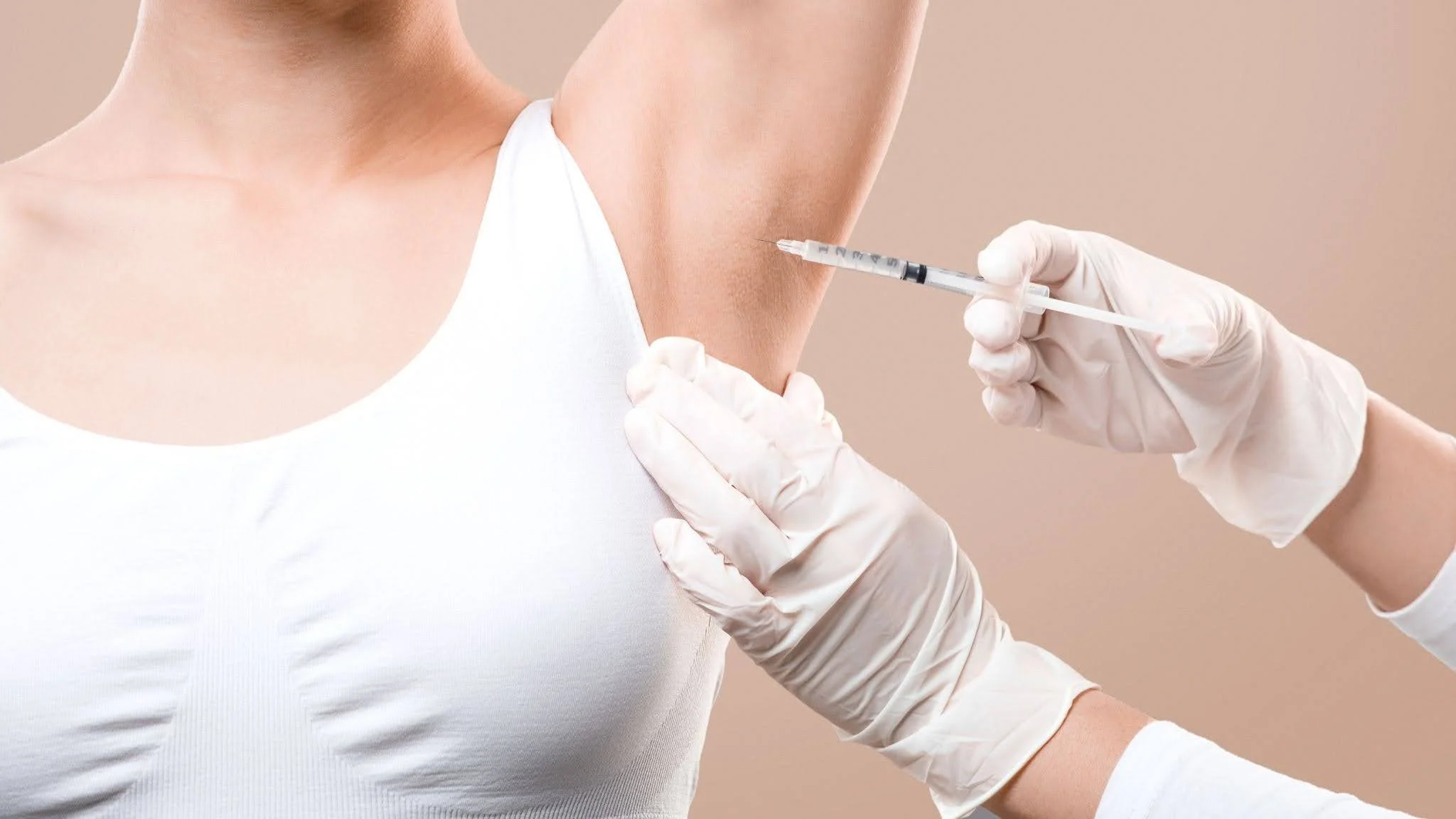
Botox (botulinum toxin) works to treat excessive sweating by temporarily blocking nerve signals that activate sweat glands. When injected into the skin of an affected area, it prevents those nerves from sending the "sweat now" message to the glands beneath the surface. The result is a significant, measurable reduction in sweating, without affecting your body's ability to regulate temperature elsewhere.
This isn't an off-label workaround. Botox has been FDA-approved for the treatment of primary axillary hyperhidrosis (excessive underarm sweating) since 2004. Clinical studies have shown a significant reduction in sweating in treated areas.
It is a commonly used in-clinic procedure for managing excessive sweating with Botox.
Treatment Areas: Underarms, Hands, Feet & More
Botox for underarm sweating is the most common and most studied application. The underarms are particularly well-suited to this treatment because the skin is accessible, the sweat glands are densely concentrated, and results are consistently reliable. Many patients notice a visible reduction in sweating within the first two weeks.
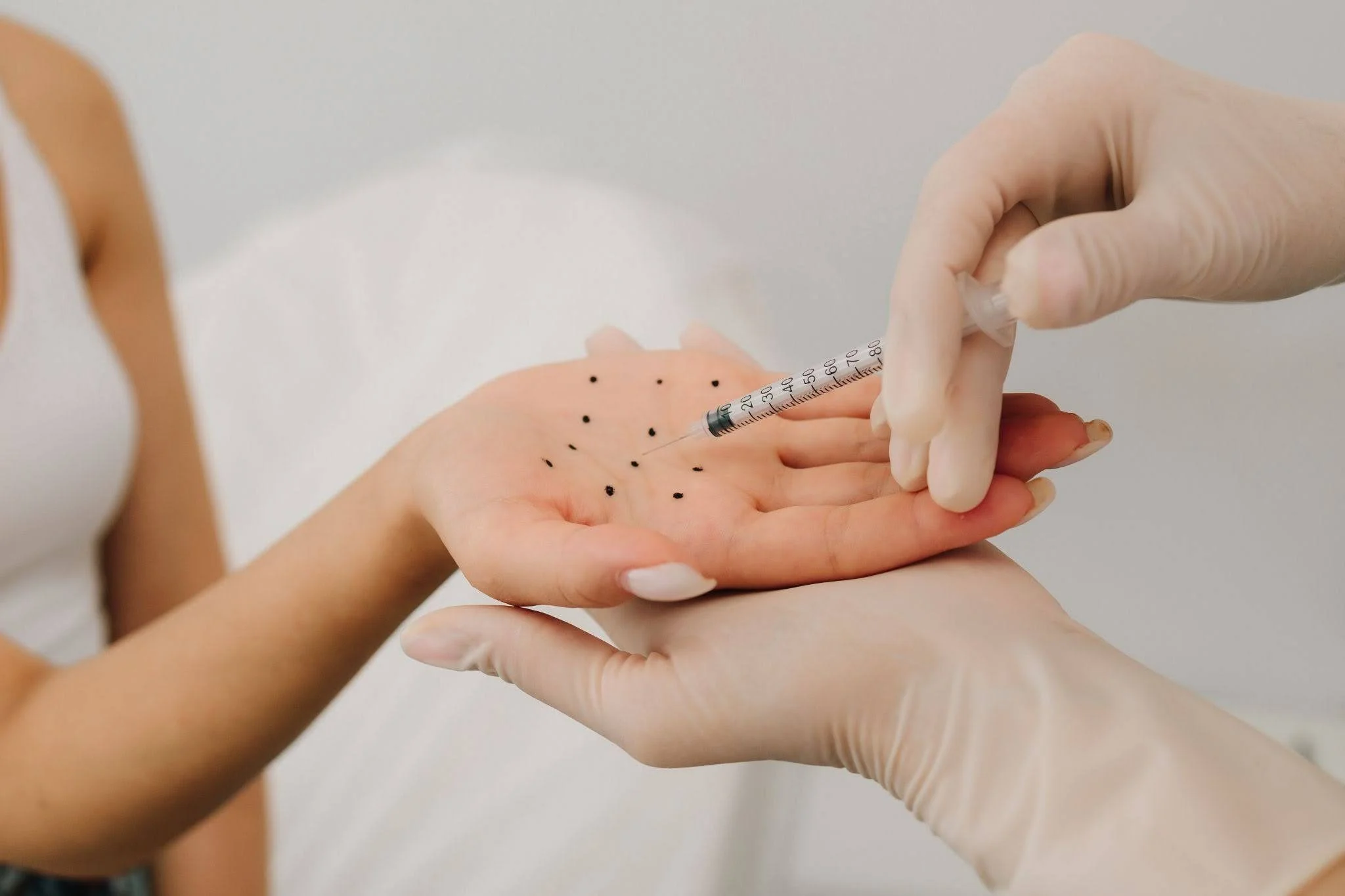
That said, hyperhidrosis isn't limited to the underarms. Botox can also be used to address excessive sweating in other areas, including the hands (palmar hyperhidrosis), the feet (plantar hyperhidrosis), and the face or scalp. If you're experiencing problematic sweating in more than one area, that's something worth discussing during your consultation so a treatment plan can be tailored accordingly.
What to Expect at Emerald Skin Lab
The Treatment Process
Your appointment at Emerald Skin Lab begins with a brief consultation to confirm the treatment area and discuss your goals. A topical numbing cream is applied beforehand to keep things comfortable. The injections themselves are small, precise, and quick; most patients are in and out within 30 to 45 minutes.
There's no downtime required. You can return to your normal routine the same day, provided you follow a few simple aftercare guidelines.
Does It Hurt?
The injections use very fine needles, and with the numbing preparation, most patients find them well tolerated. The underarm area in particular tends to be quite manageable. Any mild soreness at the injection sites typically resolves within a day or two.
When Will You Notice Results?
Most patients begin to notice a reduction in sweating within 2 to 7 days of treatment, with the full effect becoming apparent by the 2-week mark. It's gradual and natural, not an overnight switch; results become more noticeable over time as moisture in the treated area gradually reduces.
How Long Do Results Last?
Results from Botox for excessive sweating typically last 6 to 9 months, though individual experiences vary. Many patients schedule maintenance appointments once or twice a year to keep the treatment effective throughout the seasons. Some find that results extend slightly longer after subsequent treatments.
Cost Considerations
The cost of Botox for hyperhidrosis in Toronto depends on the number of units required and the treatment area. Underarm treatments generally require a consistent amount, making it easier to plan. During your consultation at Emerald Skin Lab, you'll receive a clear understanding of the expected cost.
Is Botox for Sweating Right for You?
Ideal Candidates
Botox for excessive sweating may be considered for individuals who:
• Experience sweating that interferes with daily life, work, or social situations
• Have found that antiperspirants and topical treatments aren't providing enough relief
• Are in good general health and not pregnant or breastfeeding
• Want a non-surgical approach with temporary results
It's suitable for both men and women, and there's no recovery period to plan around.
Safety & Side Effect
Botox is one of the most studied injectable treatments in medicine. When performed by a trained provider, it carries a well-established safety profile. Side effects are typically mild and temporary, such as localized soreness, minor bruising, or slight sensitivity at the injection site. Serious complications are rare when treatment is carried out in a reputable medical setting.
Why Choose a Toronto Medical Spa for This Treatment
This is a medical procedure, and it deserves to be treated as one. At Emerald Skin Lab, hyperhidrosis treatments are performed by experienced injectors in a clinical environment, with the care and precision that comes from working with patients in a medical spa setting. We take the time to understand your concerns, answer your questions, and create a plan that works for you.
Final Considerations
Hyperhidrosis can affect daily routines in ways that are not always visible to others. Understanding available treatment options allows for a more considered approach, rather than relying on short-term solutions.
Botox for excessive sweating is one of several clinical options that may be explored depending on the treatment area, severity, and individual preferences.
A consultation with a qualified provider allows for a detailed assessment and a recommendation based on your specific concerns and goals.
